

Pro Tips
Best Construction Website Design in 2026: What Separates Good From Great
Most construction company websites look the same, a stock photo of a hard hat, a phone number, and a "Request a Quote" button buried at the bottom. They check the box. But they don't win customers. The best construction websites do more than look professional. They convert visitors into leads, rank on Google, and build trust before a homeowner ever picks up the phone. We studied dozens of contractor and builder websites across residential construction, remodeling, and specialty trades to identify what actually works. One site stood out as a benchmark for how construction companies should build their online presence in 2026: IMKAT Homes, a California ADU builder at imkatconstruction.com. Here's what makes it work — and what every construction company can learn from it.
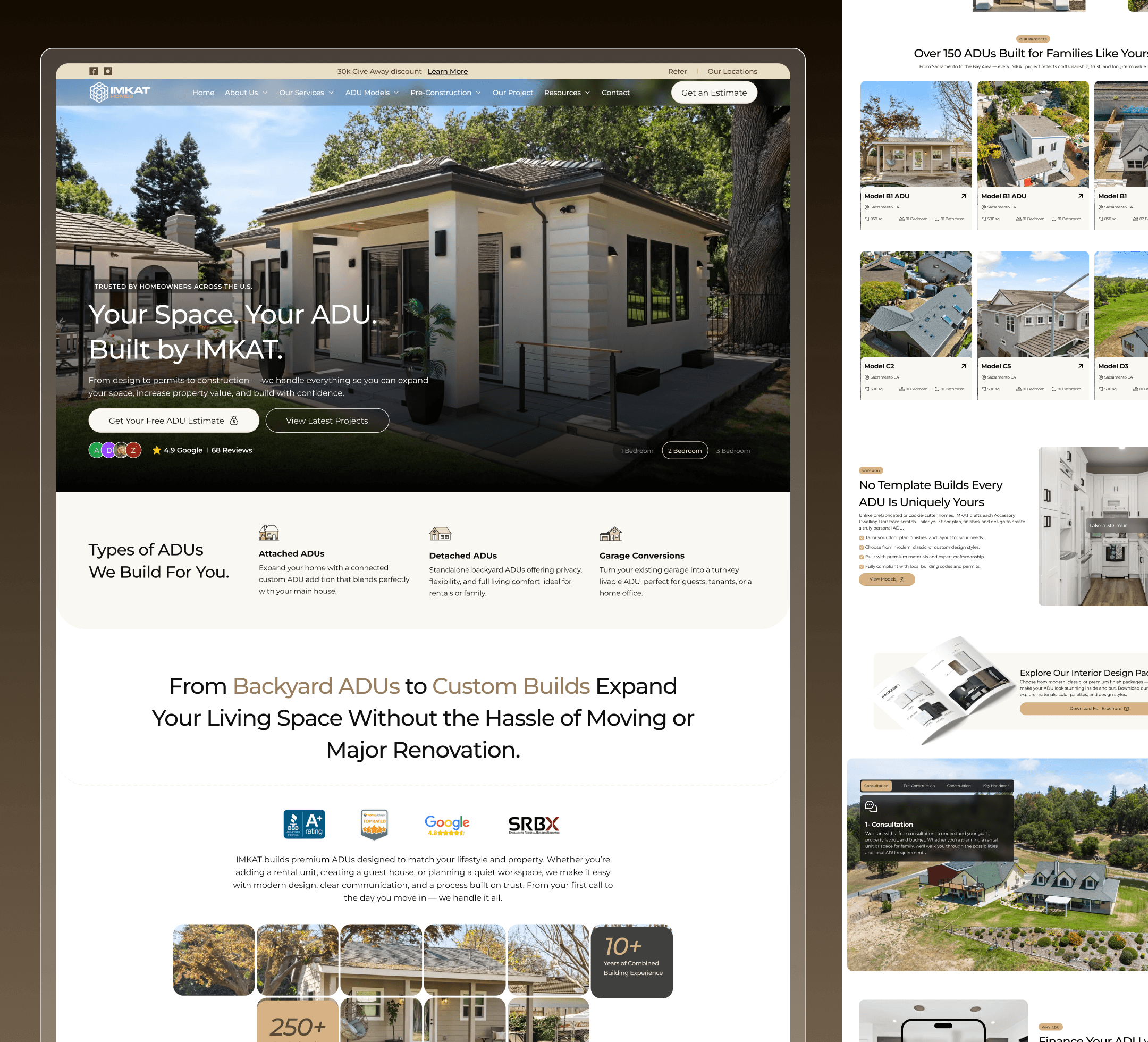
1. Clear Value Proposition Above the Fold
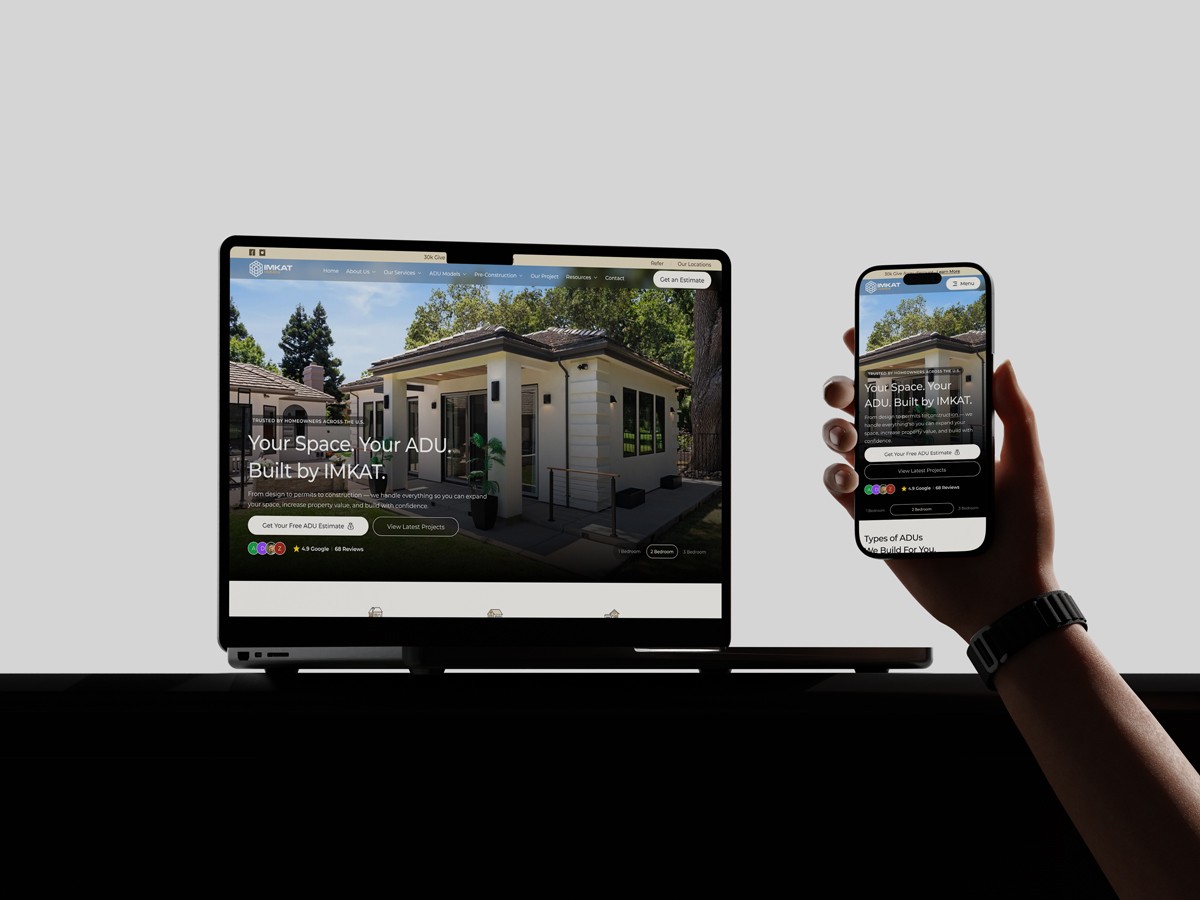
The first thing a visitor sees on imkatconstruction.com is a direct headline that answers the question every homeowner has: "What do you do, and can you help me?"
There's no vague tagline like "Building Dreams" or "Quality You Can Trust." The messaging is specific: ADU design, permitting, engineering, and construction — all handled by one team.
Why this matters for SEO and conversions:
Google's helpful content system rewards pages that clearly communicate what a business does
Visitors decide in 3–5 seconds whether to stay or bounce — a clear value prop keeps them scrolling
Specific language like "ADU builder" matches what homeowners actually search for
What most construction sites get wrong: Generic hero sections with stock imagery and slogans that could apply to any industry. If you have to read three paragraphs to understand what the company does, you've already lost half your visitors.
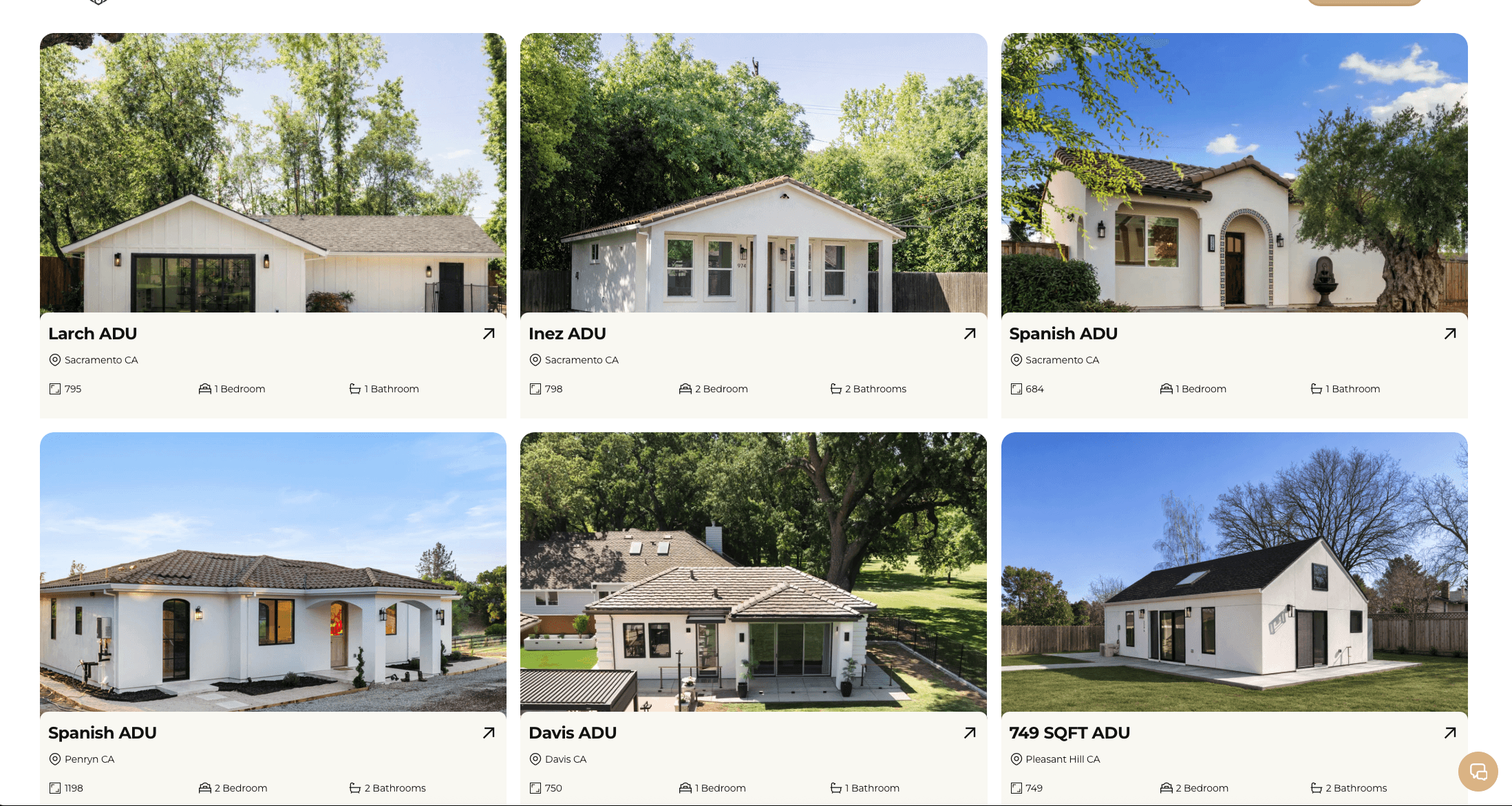
2. Visual Project Portfolio With Real Photography
IMKAT's site features over 47 completed ADU projects with actual job site photography — not stock images. Each project page includes the model type, square footage, and location.
Real project photos do three things that stock images can't:
Build trust instantly. Homeowners considering a $200,000+ ADU want proof that you've done this before. A gallery of completed backyard homes in Sacramento neighborhoods carries more weight than any testimonial.
Improve SEO through image search. Google Images drives significant traffic for construction queries. When someone searches "ADU Sacramento" in Google Images, real project photos with proper alt text and file names rank. Stock photos don't.
Reduce sales cycle. Prospects who browse 10–15 completed projects arrive at the consultation already sold. They've seen the quality. The conversation shifts from "Can you do this?" to "When can we start?"
Takeaway for your construction website: Invest in professional job site photography. Create individual project pages — not just a gallery grid. Include the project type, size, location, and a brief description. Name image files descriptively (e.g., 750-sqft-adu-sacramento.jpg, not IMG_4392.jpg).
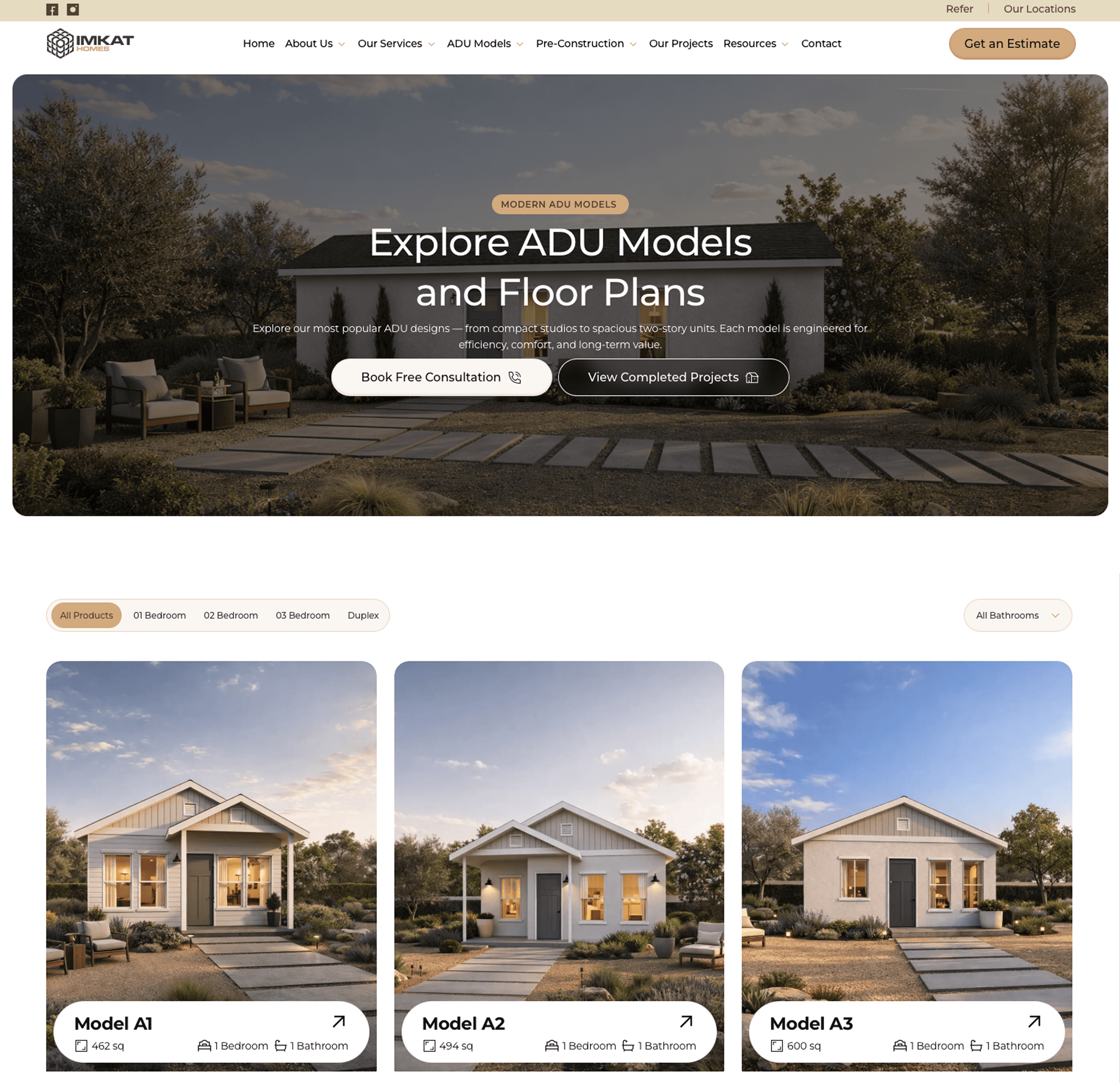
3. Product Catalog With Individual Model Pages
This is where IMKAT's site separates itself from 95% of construction websites. Instead of a generic "Our Services" page, they've built out 15 individual ADU model pages — each with its own URL, floor plan, specifications, and pricing tier.
The model pages function like product pages on an e-commerce site:
Model name and size (e.g., 494 sq ft, 1BR/1BA)
Floor plan layout
Bedroom and bathroom configuration
Category filtering (1-bedroom, 2-bedroom, 3-bedroom, duplex)
Package/upgrade options
Why this is brilliant for SEO: Each model page targets a unique long-tail keyword. Instead of one page trying to rank for "ADU floor plans," IMKAT has 15 pages targeting variations like "494 sq ft ADU floor plan," "2 bedroom ADU model," "duplex ADU plans California," and "1200 sq ft ADU layout."
This creates a content moat that competitors with a single "Our Models" page can't match.
Takeaway for your construction website: If you offer distinct products, plans, or packages — give each one its own page. Remodelers can do this with kitchen styles, deck materials, or addition types. Roofers can do it with shingle brands. Every page is a new opportunity to rank.
4. City Pages That Scale Local Visibility
IMKAT serves multiple metro areas across California — Sacramento, San Jose, and Contra Costa County. Instead of one "Service Area" page with a bulleted list of cities, they've built 45 individual city landing pages.
Each city page targets the local keyword variant: "ADU builder [city name]." This is how a single-location business competes across a wide service radius.
The right way to do city pages:
Unique H1 with the city name and primary service
City-specific content about local building regulations, permit requirements, and project examples
Local testimonials from homeowners in that area
Embedded map showing the service area
Internal links to relevant model pages and the main service page
Takeaway for your construction website: If you serve multiple cities, build city landing pages — but invest in making each one genuinely useful. Include local permit info, project photos from that area, and neighborhood-specific details. One great city page outranks ten thin ones.
5. Conversion Architecture: Multiple CTAs Without Being Pushy
IMKAT's site integrates calls-to-action throughout the user journey without the aggressive popup-and-countdown-timer approach that plagues many contractor sites.
The conversion points include:
A sticky header with phone number visible on every page
"Get a Free Site Evaluation" buttons at natural scroll points
An ADU cost calculator that gives instant estimates
A pre-construction consultation booking flow
A brochure download option for visitors not ready to call
Why layered CTAs work better than one big button: Different visitors are at different stages. Someone comparing ADU builders wants to download a brochure. Someone who's already decided wants to book a consultation. Someone doing quick research wants a cost estimate.
By offering multiple entry points, IMKAT captures leads at every stage — without forcing cold visitors into a sales call they're not ready for.
Takeaway for your construction website: Don't rely on a single "Contact Us" page. Add contextual CTAs: cost calculators, downloadable guides, consultation booking, and phone click-to-call. Match the CTA to the visitor's intent on that page.
6. Content Depth That Builds Topical Authority
Beyond the core service and model pages, IMKAT has built supporting content that establishes expertise across the entire ADU topic:
Blog posts covering ADU costs, regulations, and buyer guides
Dedicated pages for ADU financing options
Pre-construction process explainer
FAQ page addressing common homeowner concerns
Pages targeting specific ADU use cases (retirement, rental income, investors)
This content architecture signals to Google that IMKAT isn't just a business listing — it's an authority on ADUs in California. The result is stronger rankings across the entire keyword cluster, not just the homepage.
Takeaway for your construction website: Don't just build service pages. Build a content ecosystem around your expertise. A roofer should have pages about roof types, materials, warranties, insurance claims, and seasonal maintenance — not just "Roof Replacement" and "Contact Us."
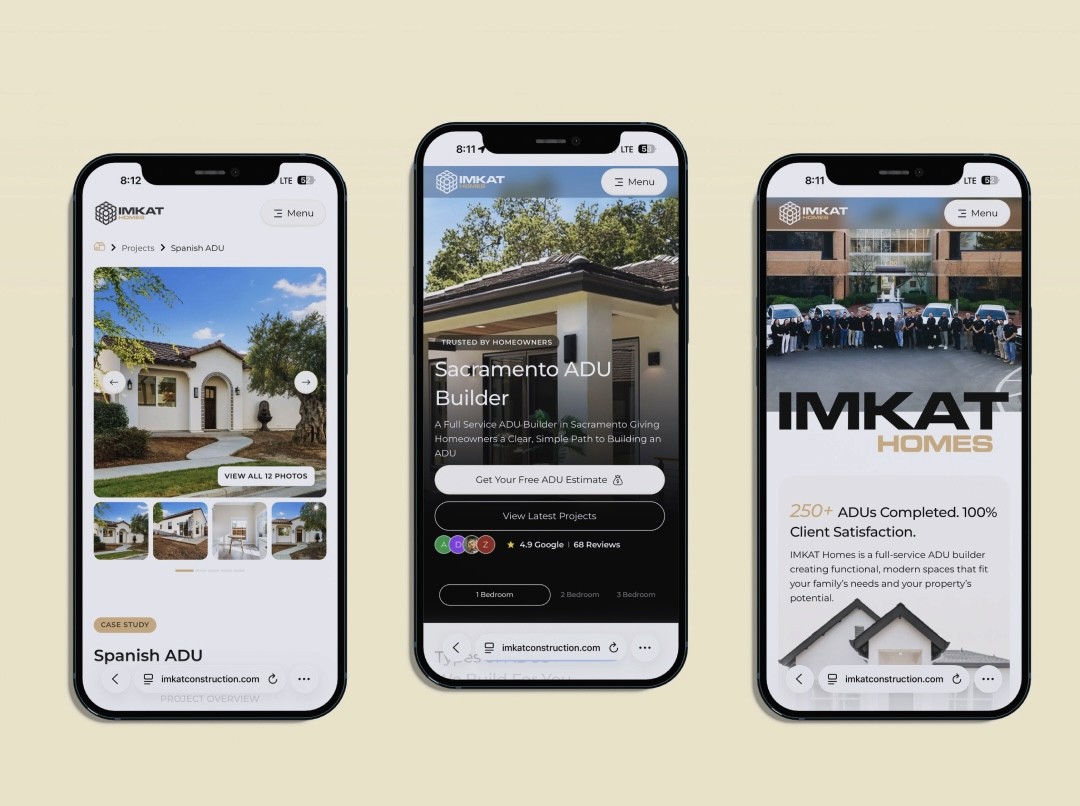
7. Mobile-First Design That Actually Works on Phones
Over 70% of local construction searches happen on mobile devices. IMKAT's site is built on Elementor with responsive breakpoints that adapt layouts, font sizes, and navigation for phone screens.
Key mobile elements done right:
Click-to-call phone number in the sticky header
Hamburger menu that doesn't break on smaller screens
Images that load appropriately sized for the device
Forms that are easy to fill out with thumbs
No horizontal scrolling or overlapping elements
Takeaway for your construction website: Test every page on your actual phone. Fill out your own contact form. Try to click your phone number. If anything frustrates you, it's driving away customers.
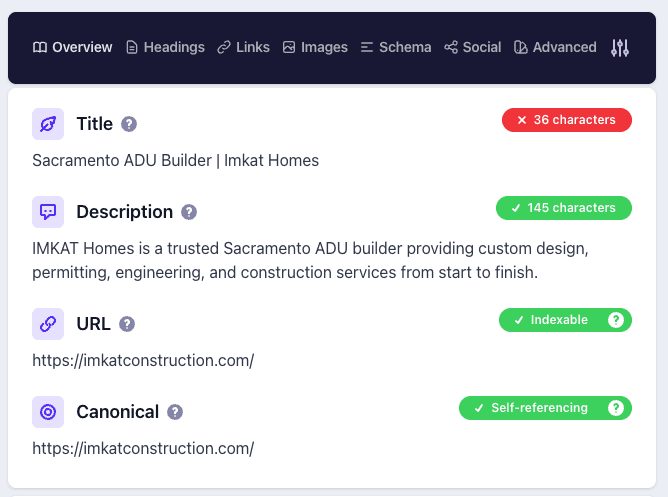
8. Technical SEO Foundation
Under the hood, IMKAT's site runs on WordPress with Elementor Pro — a common and effective stack for construction companies. The technical SEO foundation includes:
Yoast SEO for meta tags, sitemaps, and schema
Proper canonical URLs on every page
XML sitemap with separate indexes for pages, models, projects, cities, and posts
SSL certificate (HTTPS)
Google Analytics and Google Tag Manager installed
Clean URL structure without unnecessary parameters
What Every Construction Website Can Learn From This
You don't need a $50,000 custom-built website to compete. IMKAT runs on WordPress and Elementor — tools any contractor can use. What makes it effective isn't the technology. It's the strategy:
Be specific. Say exactly what you do and where you do it.
Show your work. Real project photos beat stock images every time.
Give each product its own page. Every distinct offering deserves its own URL.
Build city pages that are actually useful. Local content, not templates with city name swaps.
Create content depth. Blog posts, FAQs, process explainers build topical authority.
Design for the phone first. Your next customer is searching on mobile right now.
Layer your CTAs. Meet visitors where they are in the decision process.
Ready to Build a Construction Website That Actually Generates Leads?
At Turn Media, we design and build construction websites that rank on Google and convert visitors into booked consultations. From SEO strategy and content development to WordPress design and local search optimization — we handle it all.
Get in touch to see what we can build for you.
INSIGHTS
Related Insights You Shouldn’t Miss
Explore more strategies and breakdowns to help you turn traffic into real customers.

Best Facebook Ads Agency in Sacramento (2026 Buyer's Guide)
Looking for the best Facebook ads agency in Sacramento? Learn what separates great agencies from average ones and why local businesses choose Turn Media.

How Much Does a Business Website Cost in 2026?
Wondering how much a business website costs in 2026? Learn what affects pricing, what to expect at each budget level, and why investing in a professionally built website can generate more leads and long term growth for your business.

The Only Meta Ads Metrics Contractors Should Actually Care About
Most contractors focus on the wrong numbers. Learn which Meta Ads metrics actually predict booked jobs and revenue, so you can stop chasing vanity metrics and make smarter marketing decisions.
Built alongside business owners not just delivered to them.

We build the ads, funnels, and systems that turn your ad spend into real revenue.
Free strategy call tailored to your business
Clear next steps and recommendations
Built around your goals and budget


We help local businesses turn their online presence into a consistent source of customers through websites, marketing, and growth systems built to perform.






© 2026 Turn Media. All rights reserved.